Before the Mega Trip: Getting to Know the Northern Hardwood Resource
This is the first post in what I hope will become a longer series of updates from the road, conversations from the woods, and interesting things I learn while traveling across the Northern Hardwood resource. I have taken to calling this upcoming stretch of fieldwork the “mega trip,” mostly because it has expanded in my mind into a six-week loop covering nearly the entire project area. This journey will take me across a vast portion of the north-central and northeastern landscape to visit the forests, managers, agencies, landowners, and organizations that define the Northern Hardwood resource.
Before I leave, I wanted to take a little time to explain what this project is, what we mean when we talk about the Northern Hardwood resource, and why it matters to spend this much time talking with the people who manage it.
Northern hardwood forests are one of the defining forest types across the Lake States, the Northeast, and parts of eastern Canada. Under the definition we are using for this project, these forests are generally built around major maple, birch, and beech components, often with basswood, black cherry, and sometimes oak mixed in, depending on where you are in the range. These forests are familiar to many people, even if they may not use the term “northern hardwoods” every day, and they are a significant resource for the people who live where they are found. They are the sugar maple stands tapped for maple syrup, the mixed-species slopes of the Adirondacks, the county and state forests of the northern Lake States, the diverse ridges and valleys of northern Pennsylvania and New Jersey, and the managed private and Crown lands of Ontario, Québec, and New Brunswick, where sugar maple is proudly featured as a national symbol on pretty much anything related to Canada.
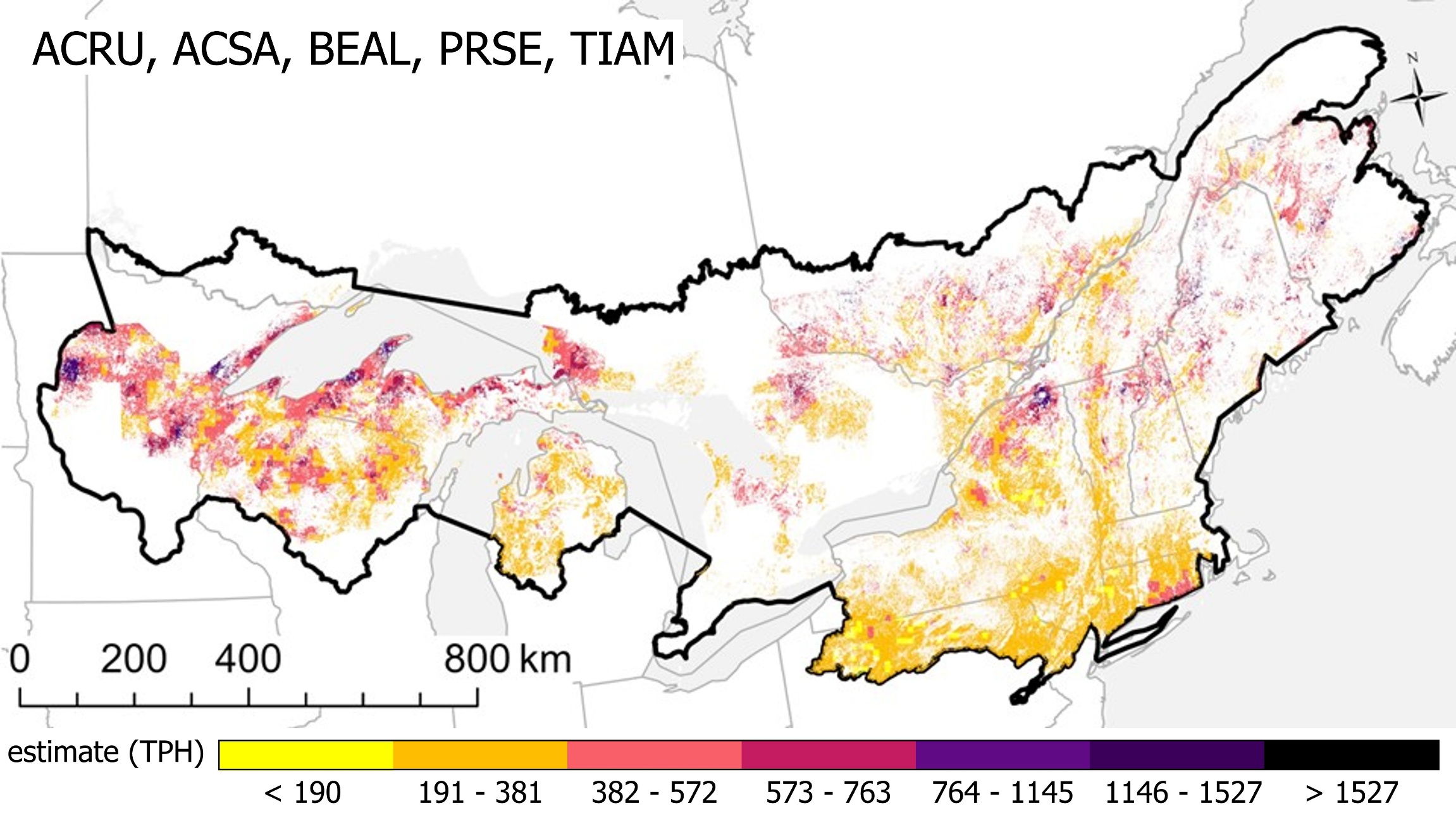
They are also working forests, community forests, wildlife habitat, recreation spaces, cultural landscapes, conservation lands, and long-term investments. The mix of species, goals, land ownerships, ecological pressures, policies, and values that people place in their woods makes northern hardwoods one of the most complex forest systems to manage in North America, yet also one of the most interesting. The same forest type can be managed under very different goals depending on who owns the land, which policies apply, which markets are nearby, which species are regenerating, what deer browse pressure looks like, what past management has done, and what kind of future the manager is trying to build toward.
The Northern Hardwoods Resilience Project is trying to understand those differences in a range-wide way. The larger goal is to enhance the resiliency of the Northern Hardwood resource by learning what is working, what is challenging, and where managers see gaps between silvicultural intent, implementation, and long-term forest outcomes. A lot of good work has already been done on northern hardwood silviculture, but there is still a major opportunity to learn from those actively managing these forests under real-world constraints.
That is where this trip comes in.
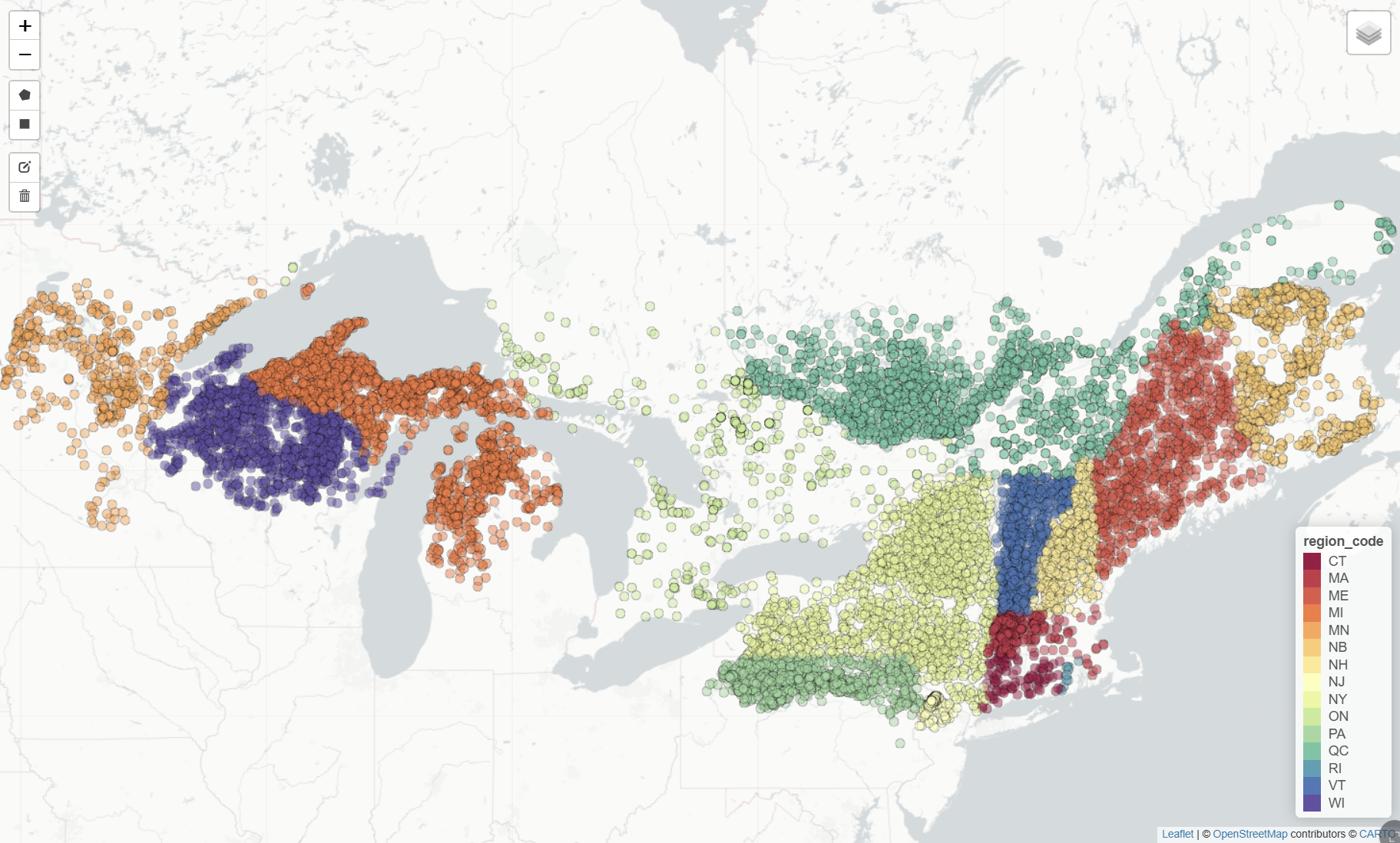
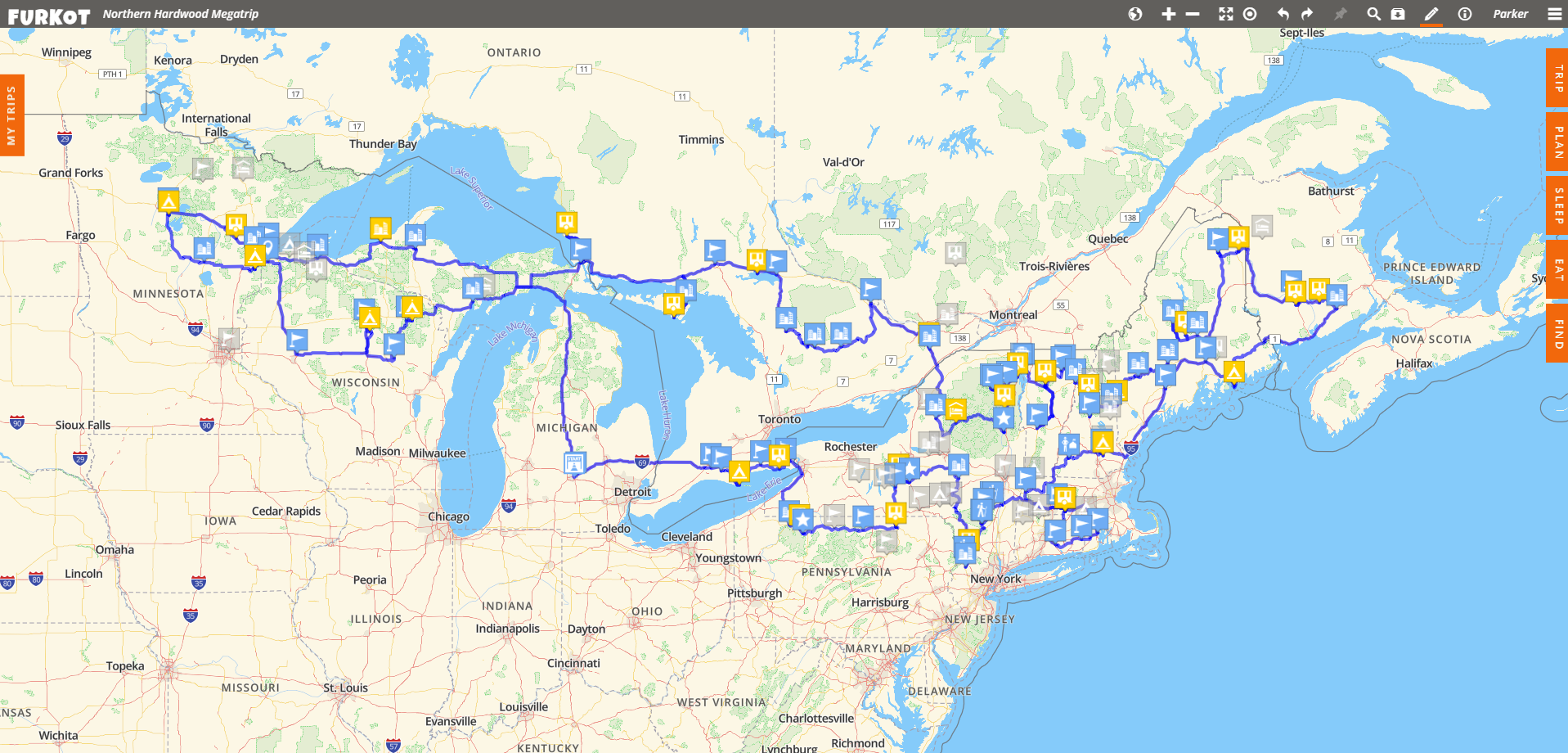
The “mega trip” will take me through 14 of the 15 political units covered by the project. That includes all 12 U.S. states in the project area, plus New Brunswick and Ontario. I will loop back to Québec later for a separate set of conversations focused on the Northern Hardwood resource there. In general, my goal is to go to the places where these forests are being managed, talk to the people who are managing them, and listen carefully to what they have learned.
The interviews focus on managers’ experiences with northern hardwoods, which can cover many different facets. We can talk about the challenges they are running into, the practices that seem to be working, the practices that are harder to implement than they look on paper, and the kinds of tradeoffs that come up when managing for timber, regeneration, wildlife, climate resilience, recreation, conservation, or cultural goals. A major part of this project is understanding how human goals and decision-making interact with the forest itself. Silviculture does not happen in a vacuum. It happens through people, institutions, policies, markets, equipment, access, weather, budgets, values, and landowner objectives.
One important aspect of the project is that we are trying to sample management perspectives across the different kinds of land ownership and management contexts that make up the Northern Hardwood resource. Broadly, we are thinking about five major manager groups: national-level managers, state/provincial/local managers, non-governmental organizations, private landowners and companies, and Tribal or First Nations managers.
We’ve grouped it this way, because each of those groups operates in a different context. In the United States, national-level management includes national forests and other federally managed lands. State and local management includes state forests, state DNR lands, wildlife areas, municipal forests, and county forests, especially in parts of the Lake States where county forests are a major part of the landscape. On the Canadian side, Ontario, Québec, and New Brunswick all have large areas of Crown land, which are held publicly and managed at the provincial level. NGOs, including land trusts and organizations such as The Nature Conservancy and the Appalachian Mountain Club, often manage land with strong conservation goals. Private ownership is the largest and most diverse owner and manager of northern hardwood forests, and includes family forest landowners, consulting foresters working with those landowners, hunting clubs, larger industrial owners, timber investment management organizations, and real estate investment trusts. Tribal and First Nations managers have another set of governance structures, responsibilities, values, and long-term relationships with forested land.
Those categories are broad, but they were segmented this way because the legal standards, institutional responsibilities, management goals, and day-to-day constraints can vary widely across them. A state forester, a consulting forester, an industrial land manager, a land trust manager, and a Tribal forestry department may all be working with northern hardwoods, but the decision space around those forests can look very different. That means, in essence, that we would expect different managers with different approaches or rule-making frameworks to try different things to manage northern hardwood forests and see different outcomes (see the difference?).
That also means each state or province has its own management context. Maine, for example, has a large amount of NGO ownership relative to many other parts of the region, with organizations such as the Appalachian Mountain Club and The Nature Conservancy managing substantial forest holdings. By comparison, in Québec, NGO ownership makes up a much smaller share of the Northern Hardwood land base. Some jurisdictions have major public land systems. Others are dominated by private ownership. Some states have a surprising amount of public land holdings for their hardwoods (New Jersey, for instance, has a majority share of state-owned and managed hardwoods, although it is a small, more densely populated state). Some have strong county forest systems. Others have more fragmented family forest ownership. The project aims to focus on those differences rather than treating the entire Northern Hardwood belt as a single uniform region.
The sampling strategy for the interviews is built around that idea. Across the full project, we aim to conduct more than 100 interviews with northern hardwood managers. Within each political unit, we want the interview sample to reflect the management context of that jurisdiction as much as possible. If a large share of the Northern Hardwood resource in a state or province is managed by a certain group, then that group should be represented in the conversations. We break down the interviews for a given state into a proportionally-representative set for that state. If we were to do three interviews in Michigan, and it was a third owned by private land owners, a third by the state forest service, and a third by the US Forest Service, then we would do one interview with each group. At the same time, we also want diversity across the entire range. That means talking with consulting foresters, public land managers, procurement foresters, industrial private landowners, NGO managers, family forest landowner-facing professionals, Tribal and First Nations forestry staff, and others who can speak to different parts of the management picture. So if we were in Michigan again with the same hypothetical breakdown but now six interviews, we would look to interview managers at two different levels of the state forest in two different management units (like a field forester and a lead silviculturalist), two different levels and two different units of the forest service (try to interview a manager in the lower peninsula and upper peninsula), and, for private lands, a consulting forester working with family forest land owners and a representative from a larger forest-owning firm.
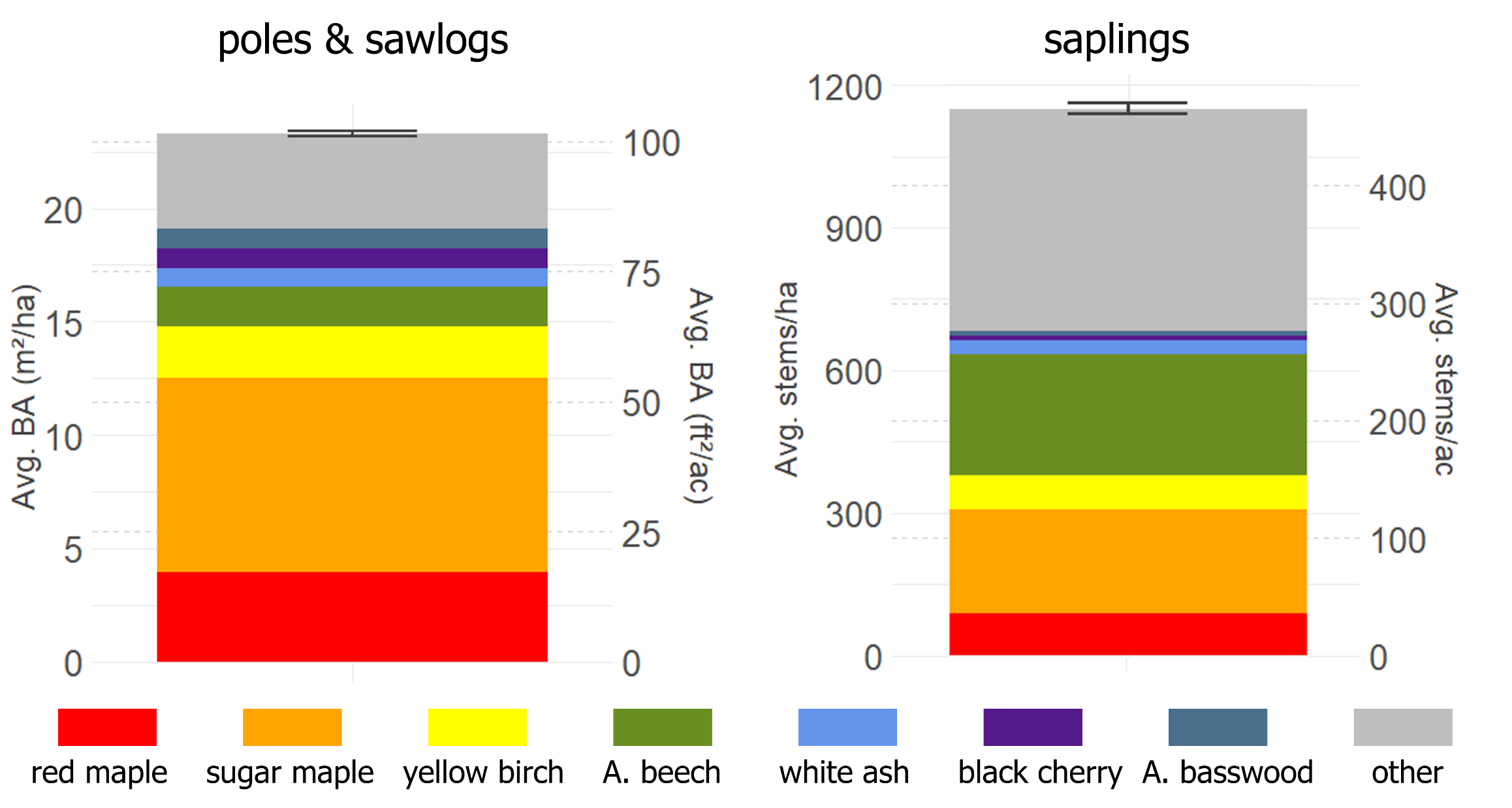
The hope is that, by the end of this process, we will have a much better understanding of what northern hardwood management looks like in 2026 across a very broad region. That includes what managers are trying to accomplish, what practices they rely on, where regeneration is working or failing, where markets or policies are shaping decisions, and where people are adapting their approaches in response to changing forest conditions.
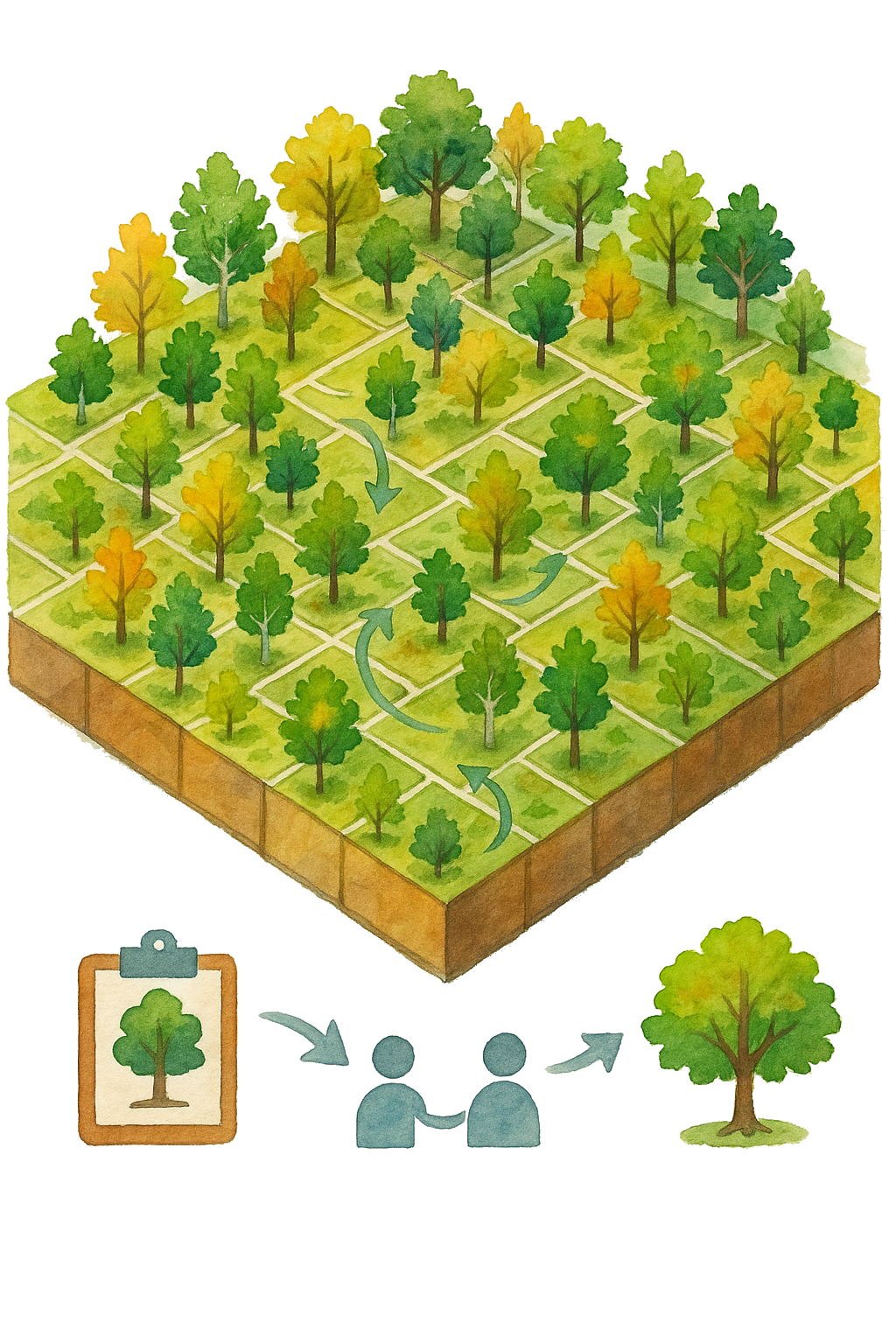
One of the things I am most excited about is the potential for knowledge sharing across the range. There may be lessons from New Brunswick that are useful in Minnesota, or examples from Wisconsin that help frame a question in New York, or management experiences from Ontario that resonate with foresters in Pennsylvania. Those connections do not always happen naturally because this is a big region with verified ecology and climate, and managers are often working within their own state, province, ownership, agency, or professional network. Part of the value of this project is carrying those conversations across boundaries.
As I travel, I will be posting updates along the way. I do not expect to have major findings while I am still on the road, and I want to be careful about treating these conversations with the respect and confidentiality they deserve. But I do expect there will be plenty to share, whether it’s stories from the trip, reflections from different parts of the Northern Hardwood range, photos of forests and field sites, and maybe a few observations about how the resource changes as I move from the Lake States into the Northeast and then into eastern Canada.
I also hope to have a live map available so people can follow along with the journey. The idea is to make this series a way for people to see where the project is going, what kinds of forest contexts are being visited, and how broad the Northern Hardwood resource really is.
At its core, this trip is about listening. Northern hardwoods are managed by a huge range of people with different goals, constraints, experiences, and relationships to the land. If we want to understand how to make this forest resource more resilient, we need to understand the forests themselves, but also the people making decisions in them every day. That is what this project is trying to do, and that is what I will be heading out to learn.
Let’s see what these forests have to tell us.