NHR Log 6: Forestry as the Centrist
When I first learned how to run a chainsaw, it was not in the way a lot of people learn how to run a chainsaw. I did not grow up cutting firewood every weekend or learning the saw from a parent on a farm. My first real experience came through a U.S. Forest Service chainsaw class, the kind trail crews and firefighters take so they can use a saw safely, maintain it, and make cuts without putting themselves or everyone around them in danger.
One of the little lessons from that class has stuck with me: you can always take more wood away from the tree when you are making a cut. You cannot add it back.
At the time, that was mostly practical advice. Pay attention. Do not overcut your hinge wood. Know where the saw is, even when you cannot see the cutting edge. Do not make a critical mistake because you were careless for two seconds.
But it also works as a pretty good metaphor for forestry. To be a responsible forest manager, you have to be careful about how you cut. You have to know what you are trying to do before you do it. You have to understand that every cut changes the set of possibilities in the stand.
And yet, here is where the metaphor gets complicated: trees do grow back. That is kind of the whole point.
A lot of the public conversation around forestry treats cutting trees as inherently unsustainable. If trees are cut, the forest has been damaged. If a forest is left alone, it has been protected. That is a simple story. It is also not really how forests work.
Forestry lives in a much harder middle ground. It is an extractive practice, because yes, wood is removed from the woods. But it can also be a sustainable practice, because wood is a renewable raw material when the forest is managed so that regeneration actually happens. That is the difficult part to explain. Fossil fuels are famously nonrenewable. They do not grow back on any human timescale. Trees, by comparison, work on a tree’s timescale. That might mean 40 years, 80 years, or 120-ish years if we are talking about old-growth characteristics in northern hardwoods. That is a long time in a human life, but it is not geologic time.
So the question is not simply, “Were trees cut?” The better question is, “What was the cut trying to do, and what kind of forest is expected to come next?”
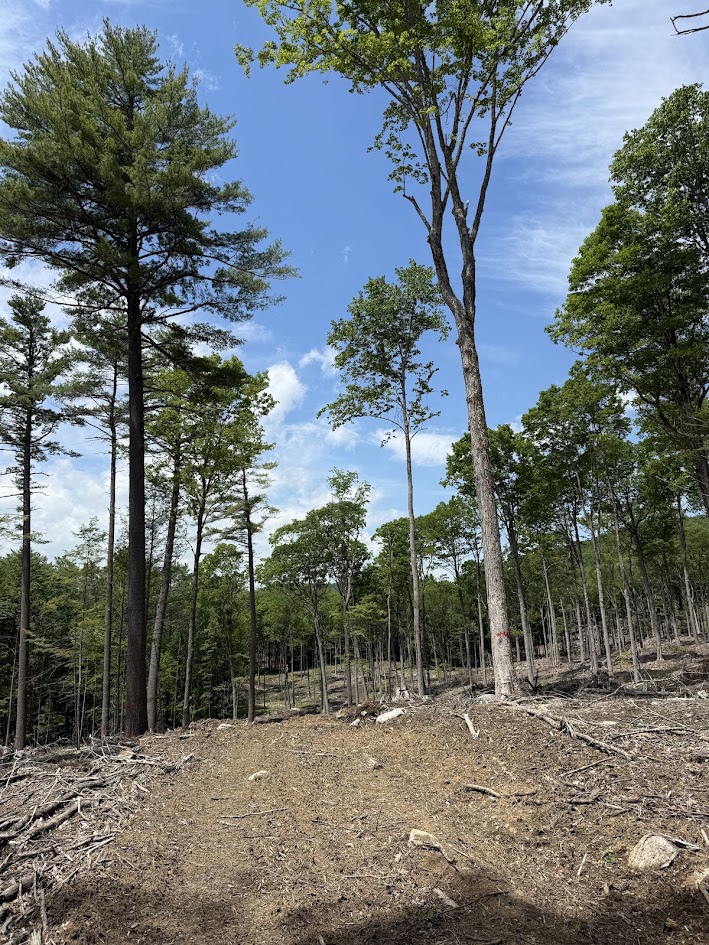
Sustainability Does Not Mean Standing Still
One of the biggest misunderstandings about forestry is the idea that a healthy forest is a forest that stays the same.
Forests do not stay the same. From day to day, they might look or feel the same. If you walk through an old-growth stand, it can feel like it has always been that way. But a forest is constantly changing. A tree blows down. It rots. It becomes habitat. It opens a gap in the canopy. Another tree grows into that space. Sometimes that process happens quickly. Sometimes it takes years. Sometimes it takes decades.
A forest is not a museum object. It is a dynamic system.
That matters because “sustainability” is a charged word. For many people, sustainability seems to mean non-intervention. No cutting. No equipment. No disturbance. In that view, the most sustainable forest is the one we never touch. And there are absolutely places where that is the right goal. Wilderness areas, old-growth reserves, national parks, rare habitats, and other protected spaces matter. Most foresters I have met care deeply about those places. Many foresters are the people arguing for them.
But that is not the whole land base, and it is not the whole purpose of forestry.
There is a long-running idea in forest management that landscapes can be thought of in something like a triad: some land protected primarily for ecological conservation, some land managed very intensively for production, and a large middle category managed for multiple uses. The specific numbers get described different ways, but the rough 10/10/80 idea is useful: 10 percent in strict conservation, 10 percent in intensive production, and 80 percent in a mixed-use working forest matrix. That working middle is where timber, wildlife habitat, recreation, clean water, carbon, rural jobs, and regeneration all have to be considered together (Himes et al., 2022; Puettmann et al., 2025).
This is where forestry becomes hard to communicate. A national park has a clean message: conserve the resource. Protect what is there. The U.S. Forest Service, by comparison, has long operated under a multiple use, sustained yield idea. Timber, recreation, watershed protection, wildlife, and other values all have to coexist. That phrase makes people’s eyes glaze over, but the work matters because most of the world’s forests are not strict reserves. They are managed landscapes where ecological, economic, and social goals overlap (Riedl, 2025; Ranacher et al., 2020).
Forestry is the middle. And the middle is hard to explain.
The Thing That Looks Wrong
A good example from northern hardwood forests is yellow birch.
If you want yellow birch to regenerate, you often need more light on the forest floor. You also need some disturbance to the ground. Not plowing the forest like a farm, but disturbing the leaf litter and the top couple inches of soil enough that yellow birch has a place to seed in. That can happen through scarification, through equipment movement, through the kind of soil disturbance that might occur during a harvest operation.
To a member of the public, that can look bad. The ground is torn up. There are ruts. The canopy is more open. Fewer big trees are standing there than before. The woods look messy.
But what looks messy in year one may be the thing that produces the better forest in year twenty.
Yellow birch is not sugar maple. It does not regenerate best under the same conditions. If you leave the canopy too closed and the forest floor too undisturbed, you may get more shade-tolerant species. You may also create conditions where less desirable species or shrub layers take over. If the goal is to keep yellow birch as part of the forest, the responsible thing may be to create the conditions yellow birch actually needs.
That is hard to see if all you see is the immediate aftermath. It is much easier to look at disturbed soil and say, “What happened here?” than it is to picture the dense thicket ten years later, the stem exclusion phase after that, and the future canopy lifting off the ground with yellow birch as part of the next stand. Northern hardwood silviculture is full of these long time horizons and regeneration puzzles, and the literature keeps coming back to the same basic point: ecological forestry often requires interventions that are obvious in the short term but aimed at complexity, resilience, and renewal over a much longer period (O’Hara, 2015; Riedl, 2025).
This is why public perception can get forestry wrong. The public often sees the cut. The forester is also thinking about the next cohort.
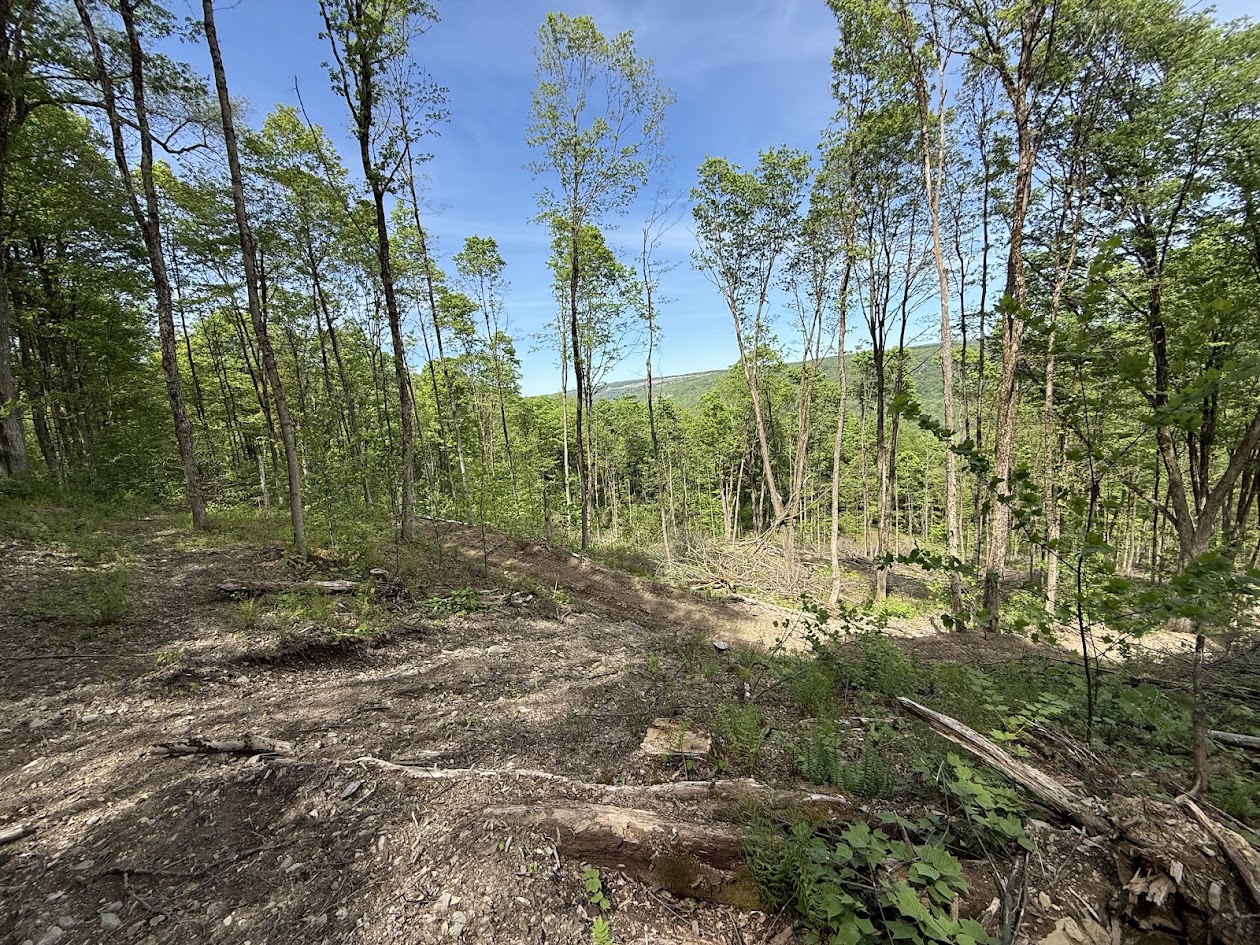
Cutting Is a Tool, Not the Whole Philosophy
Sustainable forestry is not just “cutting down trees,” although cutting trees is one of the main controls humans have. We cannot snap our fingers and make a tree grow. We can remove trees. We can thin. We can scarify. We can plant. We can use herbicide in certain situations. We can create or withhold light. We can make space for regeneration. Then we wait.
Wood fiber is a complicated way of saying wood, but it is also useful language because it reminds us that wood becomes many things. Paper. Boards. Two-by-fours. Furniture. Packaging. Heat. The material life of a tree does not end at “a tree was cut.” It becomes part of the daily human world in ways most people probably do not notice.
We use far more wood than the average person recognizes.
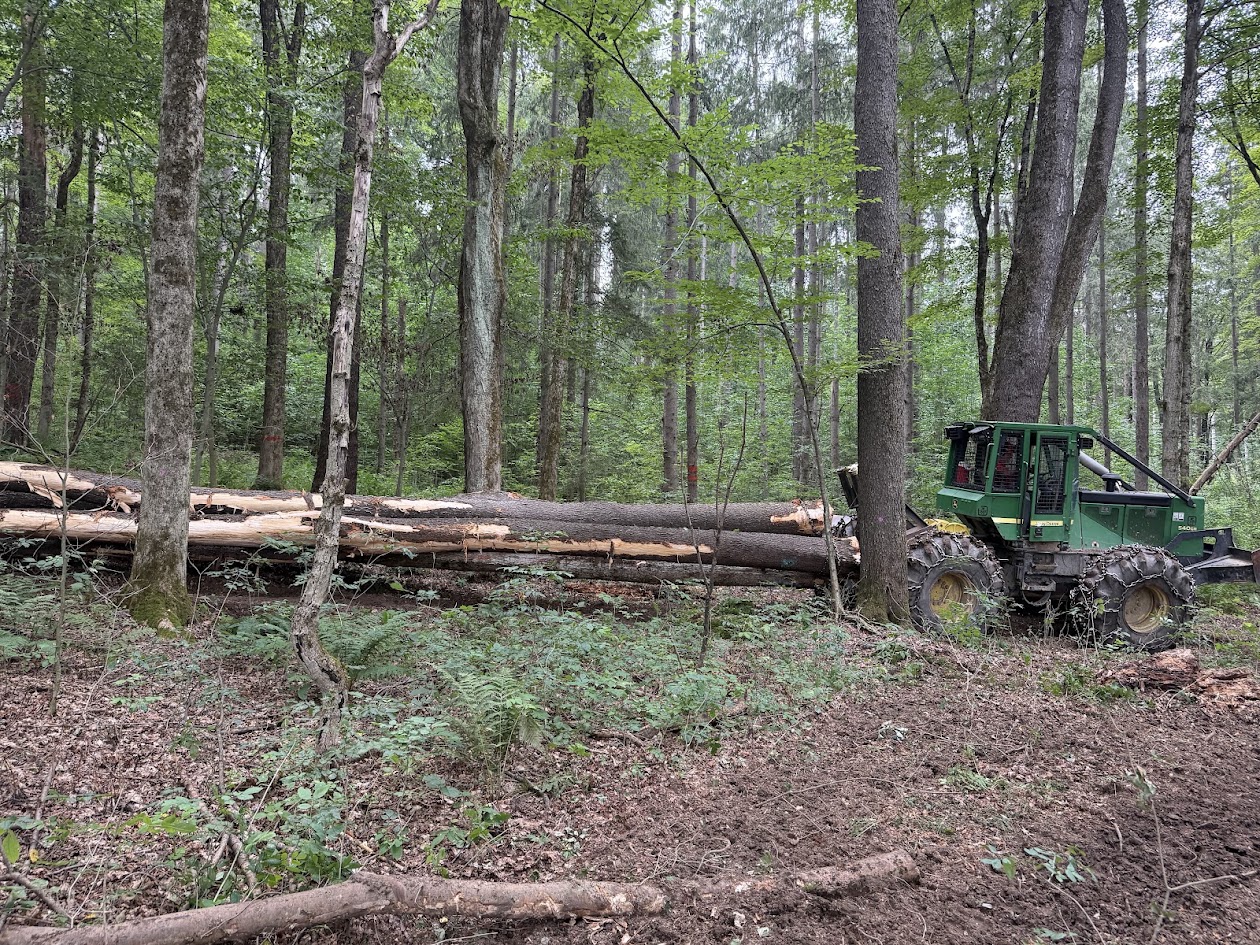
That does not mean every harvest is good. It does not mean every forester is responsible. It does not mean the timber economy gets a blank check. It means the moral category “cutting” is too blunt to describe what is actually happening.
A cut can be destructive. A cut can be restorative. A cut can be lazy, greedy, careful, experimental, necessary, poorly timed, beautifully executed, or somewhere in the fuzzy middle. The line between responsible forestry and irresponsible forestry is often place-dependent and practice-dependent.
High grading is one of the classic examples of irresponsible forestry. In its simplest form, it means taking the best trees and leaving the rest. Sometimes it gets softened under other names, like diameter-limit cutting. Sometimes removing some of the best trees can have an ecological rationale. But if the only real goal is to take the valuable stems and leave behind a stand with poor future quality, that is not responsible forestry. That is just converting the best part of the forest into dollars and leaving the next person, and the next forest, with the consequences.
To me, the difference is that a good forester is thinking about the ecology of what they are doing, not only the finances. They are thinking about the next stand. They are thinking about what trees should be left behind, what seed source matters, what the deer pressure is, what the soil can handle, what species are likely to come in, and what the stand is going to look like decades from now. That is different from simply asking what trunk can be put on a truck and sold at the gate of a sawmill.
At the same time, this cannot become a romantic story where ecology floats above economics. Sometimes foresters do have to sweeten a deal enough for the timber industry to operate. Loggers need to be paid. Mills need wood. Rural economies depend on this work. The people who actually manage the acres cannot do everything perfectly for every ecological objective if the operation cannot function.
That is part of the hard middle too.
Forestry as the Centrist
The political analogy is not perfect, but I think it helps.
In the U.S., we live in a very polarized political climate. You can be on the left or you can be on the right, and the forces of the system often push people toward one pole or the other. An independent voter might care deeply about climate change and environmental protection, which might pull them left. That same person might also care about taxes, business ownership, and fiscal policy, which might pull them right. The middle position is not necessarily bland. Sometimes it is where the most complicated set of values lives.
Political science has a lot to say about why middle positions can be hard to maintain. Moderation does not always fit the incentive structure. Primary systems, activist pressure, and media framing can reward simple, sharp positions over nuanced ones (Hall, 2019). Natural resource issues can also become polarized when political identity cues attach themselves to conservation, public lands, or environmental policy (Casola et al., 2022; Moore, 2025).
Forestry has a similar problem.
On one side, there is a preservation-only mindset: the woods should remain untouched. On the other side, there is a purely extractive mindset: the forest is mainly valuable when it becomes product. Most responsible forestry lives between those poles. It accepts that forests have ecological needs and that humans need wood. It accepts that some land should not be cut and that some land should be actively managed. It accepts that disturbance can be healthy and that disturbance can also be harmful.
That is a lot harder to put on a bumper sticker.
The phrase “sustainable forestry” sounds contradictory to some people because it pairs two ideas they think cannot coexist: extraction and sustainability. Political framing theory helps explain why. If a harvest is framed as “destructive logging,” one set of beliefs gets activated. If it is framed as “regeneration” or “forest health,” another set of beliefs gets activated. The same action can become a symbol to different groups, with one coalition seeing restoration and another seeing loss (Sotirov and Memmler, 2012; Riedl, 2025).
This is where foresters can end up shadowboxing with public perception. If you are too associated with industry, people may assume you are only trying to line pockets. If you are too associated with ecological language, industry may think you are trying to shut everything down. If you are in the center trying to meet multiple needs responsibly, you may satisfy no one’s simplest story.
And still, I think that is where the value is.
The Trouble With “Leave It Alone”
One thing I would like people to be wary of is the broad platitude that the woods should simply stay as they are. Someone who says the woods are always the same does not actually know forestry. Forests are always changing, whether humans touch them or not.
A blowdown is a disturbance. A wildfire is a disturbance. A pest outbreak is a disturbance. A derecho is a disturbance. A harvest is also a disturbance. The question is not whether disturbance exists. The question is what kind of disturbance, where, why, how often, and with what consequences.
I think about wildfire scars in places like Yellowstone. Right after a major fire, a landscape can look ugly to people. It can look ruined. But with time, that same landscape can become a young, vibrant forest again. It may not look pretty for the first five, ten, or twenty years, but forests are not built around our immediate aesthetic comfort.
Forestry asks us to think on a longer timeline than a road trip view from the window.
This is also where E.O. Wilson’s Half-Earth idea comes to mind. Wilson argued for setting aside a major share of the planet for nature. I am sympathetic to that instinct. Nature does need places where human interference is minimized. But I also think responsibly managed forests can fit within a broader conservation ethic. Working forests can provide abundance for people while still being managed ecologically. They are not the same as wilderness, but they are not automatically the opposite of nature either (Wilson, 2016).
That is an important distinction. If our only conservation category is “land where no harvest happens,” then we miss the ecological value of the enormous middle landscape where forests are managed, renewed, used, and still functioning.
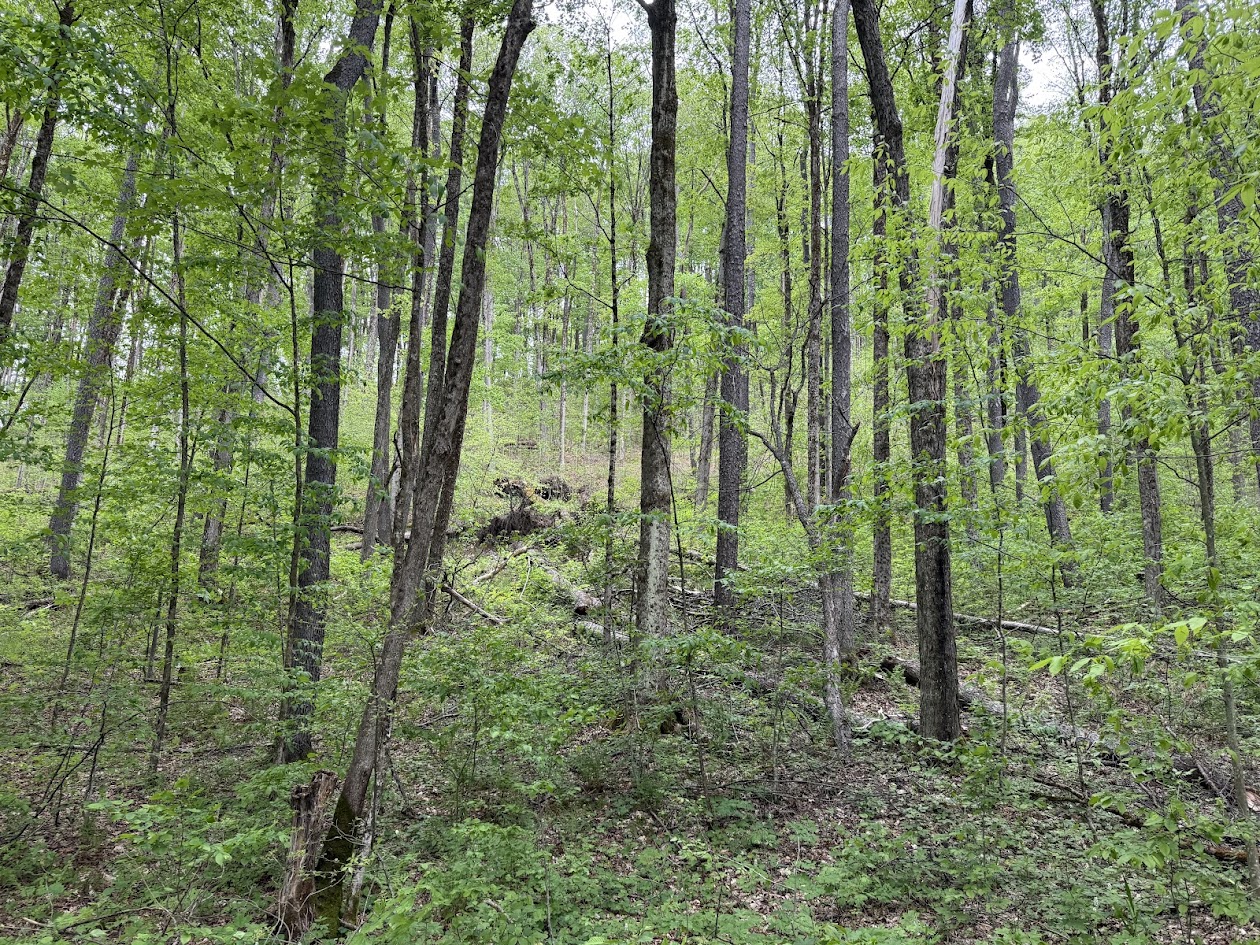
Communication Is Part of the Work
A lot of foresters know this already. They know the work is nuanced. They know forestry is continuously improving, building on experience, science, and better practices. They know the profession has changed and is still changing. Ecological silviculture, retention forestry, close-to-nature forestry, and related approaches all reflect this effort to manage forests as complex ecosystems rather than simple wood factories (O’Hara, 2015; Puettmann et al., 2025).
But the communication has not always kept up.
Public perception research keeps finding that people value forests deeply but often do not understand forestry very well. Many people prioritize biodiversity, recreation, scenery, and conservation over timber production, while also having limited knowledge of how forestry supports wood products, jobs, and ecosystem services (Ranacher et al., 2020). In some studies, people describe forestry as outdated, economically driven, or disconnected from sustainability, even when professional forestry is trying to communicate the opposite (Riedl, 2025).
That is not just a public relations problem. It is a social license problem.
Forestry depends on trust. If people do not trust foresters, then even well-designed management can look suspicious. If people feel unheard, they may assume the operation is hiding something. If they only see the equipment, the slash, the open canopy, and the mud, they may not see regeneration, habitat, future structure, or long-term planning. Research on social license in forestry makes this point plainly: economic benefits may be recognized, but trust and transparency often lag behind (Wang, 2019).
Foresters have to explain the “how” and the “why” better. Not defensively. Not by pretending all criticism is naive. Forestry has a real history of damage, including high grading, simplified plantations, and other practices that deserve critique. A “middle ground” argument should never become a shield against accountability.
But we do need a clearer public language for the difference between responsible forestry and destructive exploitation.
We need to be able to say: this cut is not the end of the forest. This cut is part of the next forest. Here is what we left. Here is what we opened. Here is what we expect to regenerate. Here is what we are watching for. Here is where we may be wrong. Here is what we will learn.
The Hard Line to Ride
This is a hard line to ride in a blog post, and it is a hard line to ride in the woods.
If I simplify too much, I end up saying something like “forestry is good,” which is not true enough. If I qualify everything, I end up with “multiple use, sustained yield,” and people’s eyes glaze over before the idea has a chance to land.
But maybe the point is that sustainability itself is not simple. It is not a synonym for untouched. It is not a synonym for profitable. It is not a synonym for pretty. In forestry, sustainability means the forest can keep functioning, keep regenerating, keep providing habitat, clean water, wood, work, recreation, and all the other things people ask of it, without being mined down to something poorer than what came before.
That takes judgment. It takes local knowledge. It takes years in the field. The older foresters I have spoken with often talk about how much they did not know early in their careers, and how long it took to really understand their woods. Younger foresters are still learning their places, their species, their soils, their deer pressure, their markets, and their mistakes. That does not mean every mistake is harmless. It means forestry is a practiced profession, not just a moral category.
A responsible forester is not someone who never cuts a tree. A responsible forester is someone who understands that cutting is a tool, and that tools can be used well or badly.
So where do I want someone to land after reading this?
I want them to question simple definitions of sustainability. I want them to be a little more comfortable with disturbance, or at least more curious about it. I want them to understand that a forest can look rough right now and still be headed somewhere healthy. I want them to be wary of anyone who talks only about money and never about ecology. I also want them to be wary of anyone who talks about forests as if change itself is the enemy.
Most of all, I want them to understand that forestry is the centrist.
Not in the weak sense. Not in the sense of splitting every issue down the middle and calling it wisdom. Forestry is centrist because it has to hold two true things at once: forests have ecological needs, and people need wood. If we care only about one side of that equation, we miss something essential.
It is difficult to defend an extractive process while also defending it as sustainable. It is difficult to explain that cutting trees can be part of loving a forest. It is difficult to say that some landscapes should be left alone, some should be intensively managed, and a large amount of land has to live in the complicated middle.
But that is the work.
And, in all honesty, if we want forests to keep providing for both nature and people, the complicated middle may be where we need to spend a lot more time.
Works Cited
Casola, W. R., Beall, J. M., Peterson, M. N., Larson, L. R., Jackson, S. B., & Stevenson, K. T. (2022). Political polarization of conservation issues in the era of COVID-19: An examination of partisan perspectives and priorities in the United States. Journal for Nature Conservation, 67, 126176. https://doi.org/10.1016/j.jnc.2022.126176
Hall, A. B. (2019). Want to reduce polarization in Congress? Make moderates a better job offer. Stanford Institute for Economic Policy Research Policy Brief. https://siepr.stanford.edu/publications/policy-brief/want-reduce-polarization-congress-make-moderates-better-job-offer
Himes, A. J., Betts, M. G., Messier, C., & Seymour, R. S. (2022). Perspectives: Thirty years of triad forestry, a critical clarification of theory and recommendations for implementation and testing. Forest Ecology and Management, 510, 120103. https://doi.org/10.1016/j.foreco.2022.120103
Moore, A. (2025, October 15). When public lands get political: What a Hatch Act complaint says about the future of conservation. NC State College of Natural Resources News. https://cnr.ncsu.edu/news/2025/10/hatch-act-complaint-public-lands/
O’Hara, K. L. (2015). What is close-to-nature silviculture in a changing world? Forestry, 89(1), 1-6. https://doi.org/10.1093/forestry/cpv043
Puettmann, K. J., D’Amato, A. W., Dockry, M. J., Fortin, M. J., Himes, A., Palik, B. J., Waring, K. M., & Windmuller, M. (2025). Silviculture: More complex than ever. Journal of Forestry, 123(2), 133-160. https://doi.org/10.1007/s44392-025-00015-2
Ranacher, L., Sedmik, A., & Schwarzbauer, P. (2020). Public perceptions of forestry and the forest-based bioeconomy in the European Union. Knowledge to Action 03, European Forest Institute. https://doi.org/10.36333/k2a03
Riedl, M. (2025). Forestry communication and public perception: Insights from the Czech Republic. Forests, 16(5), 818. https://doi.org/10.3390/f16050818
Sotirov, M., & Memmler, M. (2012). The Advocacy Coalition Framework in natural resource policy studies: Recent experiences and further prospects. Forest Policy and Economics, 16, 51-64. https://doi.org/10.1016/j.forpol.2011.06.007
Wang, S. (2019). Managing forests for the greater good: The role of the social license to operate. Forest Policy and Economics, 107, 101920. https://doi.org/10.1016/j.forpol.2019.05.006
Wilson, E. O. (2016). Half-Earth: Our Planet’s Fight for Life. Liveright.