NHR Log 7: The Silviculture Textbooks Behind NHR
Sitting in people’s houses or in their offices and talking with them about their forestry was one of the greatest parts of going out on the mega trip and visiting people in person. One Saturday, I visited the cabin of a longtime forester in the Northeast U.S. It was very nice of him to let me in on a Saturday. The cabin itself became part of the conversation. He had built it himself, with something like eight different species of wood, and he pointed them out as we talked.
Inside, he had a small library of forestry texts, including books in English and French. Some were old class books. Some were texts he still pulled out when he wanted to get some inspiration for what a best practice should look like. Afterward, we walked through the misty forest around the cabin that he had built with his own two hands and talked about forest health, his ongoing concern for it, and all of the acres that he had managed in his career.
That kind of visit helped me understand that forestry textbooks are more than assigned readings. They carry nostalgia, professional identity, and a great deal of practical trust. The sourcing and age of a lot of these texts varies widely, depending on where a forester went to school, who taught them, and what that professor sourced their information from as far as textbooks. Many great foresters also do not rely solely on the initial texts they learned from, or the professors they learned from decades ago. They keep adding to the shelf.
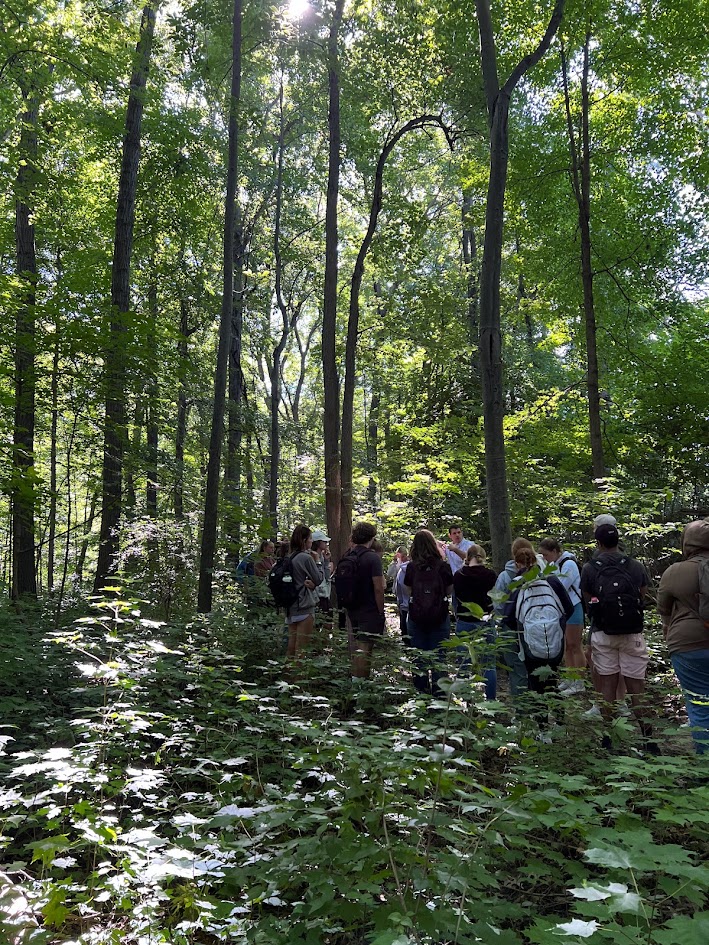
This post is the first in a short series about the literature that informs the Northern Hardwoods Resilience Project. The NHR project is not the first effort to step back and look at management from a thirty thousand foot view across northern hardwood forests. Long before this project, there were state-based efforts, area-based efforts, guidebooks, research papers, field manuals, and books that helped capture what northern hardwoods look like, what their challenges are, and how foresters have tried to respond to those challenges.
Here, I want to start with textbooks. Specifically, I want to start with major silviculture and forest management texts that form part of the foundation for what we currently do in forestry. This list is incomplete by design. A single blog post cannot capture the entire body of literature that has described northern hardwoods or the broader practice of silviculture. But it can provide a brief reading list, a little acknowledgment, and a sense of where some of the foundation is placed upon.
The key question for each book is: what did it inherit, and what did it improve upon?
The Practice of Silviculture
The older American textbook foundation begins with The Practice of Silviculture, associated first with Ralph C. Hawley and later with David M. Smith and other coauthors. This is one of the major ancestral texts in American forestry education, and its edition history stretches across much of the twentieth century. The 1997 edition, The Practice of Silviculture: Applied Forest Ecology, by Smith, Larson, Kelty, and Ashton, is often the version many foresters still recognize.
That historical context is worth keeping in view. In the early twentieth century, a lot of the American Northeast and Midwest had already been heavily cut over. Foresters were thinking about secondary growth, and in some parts of the Northeast U.S., even tertiary growth, after a landscape that had previously held old forests had been reshaped by agriculture, logging, fire, settlement, and recovery. A book like this helped organize silviculture as a professional discipline at a time when American forestry was still defining itself.
What this text inherited was the older idea that forests could be studied, tended, regenerated, and improved through deliberate practice. What it added, especially through later editions, was a more field-based and ecological understanding of stand development. It helped give generations of foresters a shared vocabulary for regeneration, tending, thinning, harvesting, and the long-term development of stands. For northern hardwood foresters, that shared vocabulary still shows up in arguments about selection systems, residual structure, stand quality, and regeneration.
This is a good example of a book that should be appreciated in historical context. It came from a forestry world that was trying to make sense of cutover forests and future forests at the same time.
Principles of Silviculture
Theodore W. Daniel, John A. Helms, and Frederick S. Baker’s Principles of Silviculture is another piece of the textbook shelf. It may not need as much space in this post as Hawley and Smith or Nyland, but it belongs in the chronology because it helped distill silviculture into principles that could be taught clearly to students.
Books like this take a large and messy field and give it structure. They explain stand development, regeneration methods, intermediate treatments, and the assumptions behind different silvicultural systems. They help students understand that silviculture is not simply a list of treatments, but a way of thinking about how forests respond through time.
Its contribution is partly in the discipline of explanation. It helped make silviculture teachable as a coherent body of knowledge, and almost every forester carries some version of that teaching into the woods.
Silviculture: Concepts and Applications
Ralph D. Nyland’s Silviculture: Concepts and Applications is one of the signature examples for this post. Waveland Press lists the third edition as 2016, but the book’s earlier editions have already had a long influence. For many forestry students, this is one of the texts that shaped how they first learned the discipline.
Nyland’s book is now often treated as what we might call classical silviculture. I do not mean that as a criticism. In many ways, the book recognizes the importance of ecological principles and the need to apply them in forest settings. It covers the tools of silviculture in a broad and practical way: regeneration, site preparation, selection systems, shelterwood systems, clearcutting, thinning, release, pruning, improvement cutting, stand rehabilitation, coppice systems, and the administrative realities that shape forestry decisions.
For northern hardwoods, Nyland is especially important because of the attention given to selection systems and uneven-aged management. Northern hardwood forestry has often been described through the language of single-tree selection, group selection, residual stocking, diameter distributions, cutting cycles, tree quality, and regeneration of tolerant and mid-tolerant species. Even when foresters disagree about the details, they are often arguing in a language that books like Nyland helped organize.
The iterative improvement key here is that Nyland gathers the broad practice of silviculture into one large, usable reference. It inherits the older framework of silvicultural systems and improves upon it by giving foresters a fuller sense of how those systems can be applied across management objectives, ownerships, and forest conditions. It is a book for learning, but also a book for returning to.
A Critique of Silviculture
Klaus J. Puettmann, K. David Coates, and Christian Messier’s A Critique of Silviculture: Managing for Complexity plays a different role on this shelf.
The critique centers on the ways classical silviculture often relied on production-oriented assumptions, simplified stand models, and a cleaner view of forest development than forests usually provide. Those assumptions were useful for teaching and planning, but forests are complex systems. They have spatial variability, biological legacies, mixed species interactions, uncertainty, disturbance history, feedbacks, and social contexts that do not always fit neatly into stand tables or idealized prescriptions.
The book gives language to a shift already underway in forestry: a growing understanding that we need to apply more ecological principles in order to achieve healthier ecosystems and a better sustainable system overall. It helps explain why complexity itself deserves attention, and why silviculture improves when it takes uncertainty seriously.
I want this part of the reading list to stay short. The goal here is not to focus on the negative, but the book belongs here. Critique is part of continuous learning. It makes the shelf more honest.
Ecological Forest Management
Jerry F. Franklin, K. Norman Johnson, and Debora L. Johnson’s Ecological Forest Management, listed by Waveland Press as 2018, broadens the conversation from silvicultural treatments to forest management as a whole. It takes the movement toward ecological thinking and places it in a wider context: forest ecosystems, social and political realities, economics, law, fire, biodiversity, climate change, certification, planning, and uncertainty.
The contribution here is integration. It inherits silviculture, ecology, planning, and policy, and then asks how those bodies of knowledge can be brought together in a management philosophy. For the NHR project, northern hardwood resilience is more than a question of which treatment to apply in one stand. It is also a question of how we think across ownerships, objectives, forest health concerns, climate uncertainty, regeneration problems, wildlife habitat, carbon, markets, and the social acceptability of management.
It places silviculture inside the broader world where decisions actually happen. That is one of the major steps in the evolution of this textbook shelf.
Ecological Silviculture
Brian J. Palik, Anthony W. D’Amato, Jerry F. Franklin, and K. Norman Johnson’s Ecological Silviculture: Foundations and Applications, listed by Waveland Press as 2021, is a strong place to end this first post. It is one of the clearest examples of the newer ecological model of silviculture, and it directly includes northern hardwoods as one of its major forest examples.
One of my favorite things about this book is that it applies a lot of knowledge through images and examples of what could happen in the woods. It does not stay abstract for long. It shows how silviculture can look in practice across different forest contexts, including Douglas-fir systems in the Pacific Northwest, ponderosa pine systems in the Intermountain West, northern hardwood systems, and Great Lakes red pine systems.
For northern hardwoods, the book is especially useful because it discusses forests shaped by frequent gap-scale disturbance. That framing fits a forest type that has always had to wrestle with small-scale disturbance, partial cutting, uneven-aged structure, regeneration, deer browse, invasive plants, tree quality, canopy gaps, and the challenge of applying a treatment that looks good on paper to a forest that is always messier in practice.
The iterative improvement key here is application. Ecological Silviculture inherits classical silvicultural systems, the critique of simplified models, and the broader ecological forest management perspective. It improves upon that inheritance by showing how ecological principles can be translated into actual silvicultural strategies, with enough images and examples that a reader can begin to picture the woods.
What This Shelf Adds to NHR
The Northern Hardwoods Resilience Project is built on a long intellectual history. Some of that history is in journal articles. Some of it is in state guides, extension publications, field manuals, and books about people’s experiences with forests. Some of it is in textbooks, the old class books that foresters carried with them into their careers and sometimes still pull off the shelf when they need to think.
These books do not all say the same thing. They come from different decades, different regions, different educational traditions, and different assumptions about what forestry is trying to do. That is part of why they are useful. Together, they show how silviculture has grown over time, from organizing the recovery and management of cutover forests, to building a shared language for treatments, to applying ecological principles, to recognizing complexity, uncertainty, and resilience.
For the NHR project, we are trying to understand northern hardwood management across a large region and across many ways of knowing. We are looking at what the northern hardwood resource looks like now, what challenges it faces, and how current silvicultural practice has been shaped by earlier work. These textbooks are part of that story.
They are also a reminder that forestry depends on continuous learning. The best foresters I met were not frozen in the period when they first learned silviculture. They had old books, but they also had newer books. They had experience, but they also had questions. They had trusted practices, but they were still worried about forest health and still trying to improve outcomes on the landscape scale for our forests.
That is the spirit I want this series to carry forward.
The next posts will move outward from textbooks. One will look at narrative forest books and books that describe people’s experiences with forests, including works such as Our Northern Forest and Ethan Tapper’s How to Love a Forest. Another will focus on guidebooks, field manuals, identification guides, and white papers that help explain the scientific what of what is happening in the northern hardwood resource, including examples like Bark: A Field Guide to Trees of the Northeast. A fourth post will look at academic papers that helped inform the Northern Hardwoods Resilience Project and the scientific basis for managing northern hardwoods well.
This list is non-exhaustive, and I would like it to be iterative. If there are books that should be added to this shelf, I hope people will send them along. Forestry has always improved by adding more experience, more observation, more questions, and more concepts to the woods.
Texts Mentioned
Hawley, R. C., Smith, D. M., Larson, B. C., Kelty, M. J., & Ashton, P. M. S. The Practice of Silviculture and The Practice of Silviculture: Applied Forest Ecology. Various editions.
Daniel, T. W., Helms, J. A., & Baker, F. S. Principles of Silviculture. 2nd edition. McGraw-Hill, 1979.
Nyland, R. D. Silviculture: Concepts and Applications. 3rd edition. Waveland Press, 2016.
Puettmann, K. J., Coates, K. D., & Messier, C. A Critique of Silviculture: Managing for Complexity. Island Press, 2009.
Franklin, J. F., Johnson, K. N., & Johnson, D. L. Ecological Forest Management. Waveland Press, 2018.
Palik, B. J., D’Amato, A. W., Franklin, J. F., & Johnson, K. N. Ecological Silviculture: Foundations and Applications. Waveland Press, 2021.