NHR Log 8: How Family Forest Landowners Learn
For the last few years, while I worked on agroforestry for my master’s degree, one of the things we talked about a lot was the way information moves through separate silos. There is an agricultural silo of information, and then there is a forestry silo of information, and there is not always much cross-pollination between those two groups. That matters because the people actually making decisions on land are rarely moving through one clean, coordinated educational system. They are learning from consultants, extension agents, neighbors, YouTube channels, short-form videos, family history, personal intuition, and whatever experience they have accumulated from working or walking the same woods over time.
In agriculture, there is a model for thinking about this called agricultural knowledge and innovation systems, or AKIS, pronounced “AKIS.” AKIS is usually used to describe the people, organizations, and institutions that generate, share, and use knowledge and innovation in agriculture (European Commission 2019; Knierim et al. 2015). There is also a smaller, farmer-centered version called micro-AKIS, which looks more closely at the advice, relationships, and knowledge channels surrounding an individual producer or farm household (Sutherland and Labarthe 2022; Madureira et al. 2022). These models are connected to older ideas like diffusion of innovation theory, although the point here is less about adding theory for theory’s sake and more about adapting a useful agricultural knowledge and innovation system process to forestry itself. What I am interested in is whether this language can help describe how we talk to landowners and how landowners actually learn what they are going to do on land.
The landowners I am thinking about here are smaller family forest landowners, who make up a huge mosaic of the landscape. They are incredibly difficult to model because their motivations vary so widely. They have different levels of education, different impressions of what should or should not be done in the woods, different financial pressures, different family histories, and different hopes for what their land is supposed to become. Some want timber revenue, some want wildlife habitat, some want trails, some want privacy, some want a legacy for their kids, and some are still trying to figure out what they own. Whatever they end up doing in northern hardwoods usually relies on what their knowledge networks look like.
That was one of the things that came up repeatedly in conversations with consultant foresters on the road trip. Consultants would describe uncertainty about where landowners were getting their ideas for how to manage land. A landowner might come into a conversation with a strong impression of what should happen in the woods, but that impression might not match what the site can actually support. Sometimes expectations are different than what you could get out of their woods because of site quality, soils, stand condition, markets, access, deer pressure, or whatever else might be shaping the place. Those gaps matter because forestry decisions are always filtered through the actual land base. A good idea in one place can become a frustrating idea somewhere else.
Some of these learning channels are formal. A landowner might talk with an extension agent, attend a workshop, speak with an agricultural advisor, or pay a forestry consultant for management planning or harvest oversight. Other channels are informal, independent, and much harder to capture. Many landowners work outside of formal systems entirely. They may search online, follow a YouTube channel, watch someone on Instagram, or talk with a neighbor who had a harvest done five years ago and either loved it or hated it. Their education may be disjunct and non-coordinated, but that does not mean it is irrelevant. In many cases, that informal learning is the real education system.
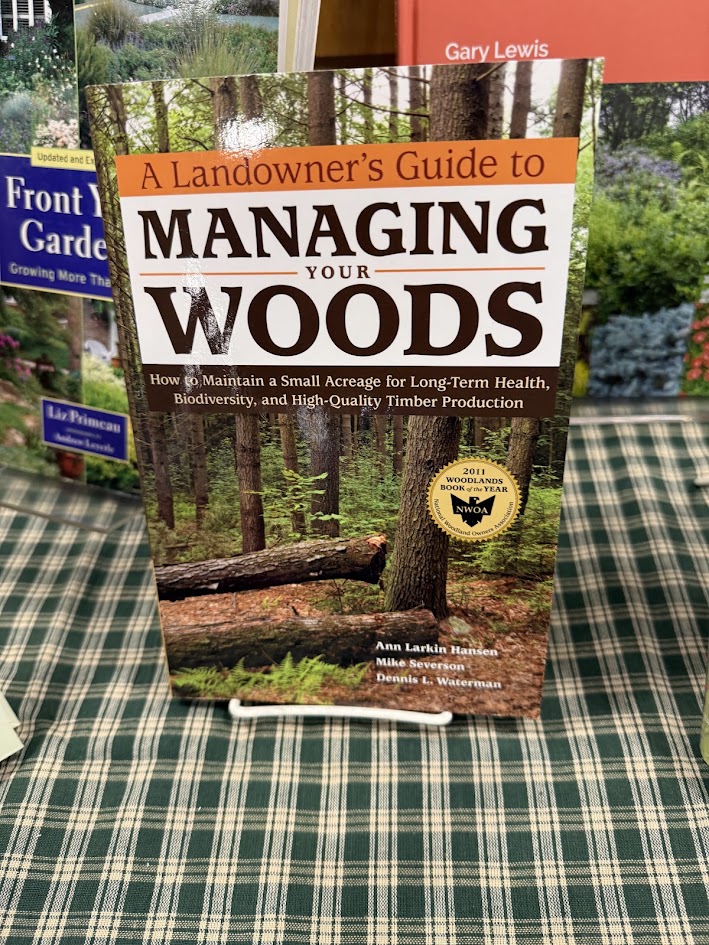
The forestry version of AKIS has to account for patience. That is one of the biggest differences between adapting an agricultural model and applying it to a forested system. In agriculture, you can apply concepts on a single-year basis and see some kind of result within the rhythm of a growing season. Forestry does not usually answer that quickly. Forest management relies on many years of growth and change, and the feedback loop is much slower. A landowner can do real work and still wait years before the outcome feels obvious.
That slow feedback loop can lead to frustration. Some landowners express that they are not getting the outcomes they want fast enough, but the nature of doing forestry is that things usually happen slowly. When people carry expectations from agricultural systems, online media, or quick before-and-after content into the woods, they may expect a forest to respond in a way that forests rarely do. At the same time, the slower pace can make the work more rewarding. When I talk with landowners who are proud of the outcomes they have had in their woods, those outcomes are usually the result of years of persistent work, persistent labor, and holding on to the land that they have.
Land tenure is a huge part of this. It may be worth bringing up the idea that average land ownership changes about every 17 years for forest landowners. Seventeen years is not enough time to see a forest all the way through different stages of development, harvest, and post-harvest response. Once that average is spread across the actual range of ownership, some landowners may be holding on to land for five years, or less than ten years, before it changes hands again. If land is constantly in flux, and different landowners bring different goals each time, the educational system becomes even harder to understand. Do previous owners help provide references to new owners so there can be continuity with a forestry consultant? Maybe not. Do new owners seek out education when they inherit or purchase land? The evidence would suggest maybe not, or at least not as much as we might hope.
This is where forestry education becomes more complicated than handing someone a pamphlet or maintaining a list of consultants. The question is how a landowner learns inside a system where ownership can change faster than the forest can respond. A consultant may build a relationship with one owner, only to have the property sold before the long-term results of the work are visible. A landowner may begin learning from one channel, then shift to another, then act based on a mixture of professional advice, online content, family expectations, and personal goals. For a landscape made up of many smaller ownerships, the knowledge system is fragmented because the ownership system is fragmented too.
It is also regional in a strange and incomplete way. If you are in Michigan and trying to learn how to manage your forest, you might look to Minnesota or Wisconsin for examples because they feel close enough, ecologically and culturally, to be relevant. Are you looking to Maine? Are you looking to Massachusetts? Maybe not. You are probably not thinking that far out, even if northern hardwood knowledge from those places could still matter. There is so much that feeds into the northern hardwood knowledge base we have, including textbook sources of silvicultural knowledge, regional experience, extension work, agency guidance, university research, logger experience, consultant judgment, and landowner experimentation. The problem is that these sources do not always meet one another in a way that is legible to the person trying to make a decision on forty acres.
A forestry AKIS or micro-AKIS model could help us name that problem. It could describe the channels that family forest landowners actually use, instead of assuming that formal education is the center of the system. It could help us ask where landowner ideas come from, how those ideas move between people, and where they become distorted, strengthened, or adapted to local conditions. It could also help consultants understand why a landowner arrives with certain expectations, and it could help landowners calibrate those expectations to the actual woods in front of them.
I do not think the answer is simply to tell landowners to seek better information, because that still puts most of the burden on the landowner to find the right person, the right publication, the right workshop, or the right video at the right time. A better forestry knowledge system would put landowners closer to consultants if they need them. That could mean programs beyond a list of contacts that a state might provide. It could mean office hours for forestry consultants. It could mean government legitimately supporting forest consulting and forestry consulting directly to landowners. That would take forestry as a formalized and well-intuited field and put it closer to the people who are actually making choices on private land.
At the same time, forestry should probably take online learning more seriously. Short-form content is not going away. TikTok, Instagram, Facebook reels, and YouTube are already part of how people learn what is possible, exciting, or normal. The risk is that forestry knowledge gets flattened into spectacle or bad advice. The opportunity is that silvicultural knowledge can be made more available in quick formats that might interest a landowner, as long as the content is responsible and engaging. As a Gen Z myself, it can feel a little strange to take what some might consider a stodgy older profession and say, let’s make it a meme. But I see guys slinging chainsaws all the time on Instagram, and we could take a lesson or two from them. They take the exciting part of forestry work and publicize it pretty well.
That does not mean every forestry education effort needs to become entertainment. It means we should pay attention to where attention already goes. If landowners are learning through fragmented, informal, and person-to-person channels, then those channels are part of the system whether professional forestry recognizes them or not. A responsible forestry knowledge system would meet landowners in more than one place: in the woods, in an office hour, through a consultant, through peer networks, through extension, through regional silvicultural literature, and through the online formats people already use to decide what is worth caring about.
The deeper issue is that forestry education is really about knowledge flow. It is about how ideas move from research to consultants, from consultants to landowners, from landowners to neighbors, from one region to another, and from one owner of a property to the next. It is also about how ideas slow down, break apart, or fail to translate when the system lacks capacity. Regional knowledge systems can be stitched together more intentionally, but that comes back to how much capacity we have to do that work. Someone has to maintain the bridges between agricultural and forestry information, between formal institutions and informal channels, between the long time scale of forests and the shorter time scale of human attention.
Forestry relies so much more on patience. That patience has to apply to the land itself, but it also has to apply to education. Landowners rarely become fluent in forest management all at once. They learn through scattered encounters, trial and error, advisors, mistakes, neighbors, workshops, posts, videos, and years of watching what their woods do after something changes. If AKIS gives us a useful language, it is because it helps us see those scattered encounters as part of a real system. The system may be incomplete, disjunct, and hard to model, but it is still shaping the northern hardwood landscape one landowner decision at a time.
Works Cited
European Commission. 2019. Building Stronger Agricultural Knowledge and Innovation Systems (AKIS) to Foster Advice, Knowledge and Innovation in Agriculture and Rural Areas. PDF.
Knierim, A., K. Boenning, M. Caggiano, A. Cristovao, V. Dirimanova, T. Koehnen, P. Labarthe, and K. Prager. 2015. “The AKIS Concept and Its Relevance in Selected EU Member States.” Outlook on Agriculture 44(1): 29-36. https://doi.org/10.5367/oa.2015.0194.
Madureira, Livia, Pierre Labarthe, Carla S. Marques, and Gina Santos. 2022. “Exploring microAKIS: Farmer-Centric Evidence on the Role of Advice in Agricultural Innovation in Europe.” The Journal of Agricultural Education and Extension 28(5): 549-575. https://doi.org/10.1080/1389224X.2022.2123838.
Sutherland, Lee-Ann, and Pierre Labarthe. 2022. “Introducing ‘microAKIS’: A Farmer-Centric Approach to Understanding the Contribution of Advice to Agricultural Innovation.” The Journal of Agricultural Education and Extension 28(5): 525-547. https://doi.org/10.1080/1389224X.2022.2121903.