NHR Log 9: Do We All Remember the Lorax Properly?
When most people remember The Lorax, I think they remember the warning. They remember the Once-ler cutting down trees, selling Thneeds, building an industry, and taking it too far. They remember the landscape after the damage has already happened. They remember the Lorax speaking for the trees.
That is a fair memory of the story, but I do not think it is the whole memory. The Lorax never once told the Once-ler that he could not cut down any trees. The Once-ler took it too far. He crossed the line from use into abuse. He left no resources behind and no way for there to be any regeneration. The moral problem was not that a tree was used. The moral problem was that nothing was left to carry the forest forward, and that distinction matters for forestry more than I think we usually admit.
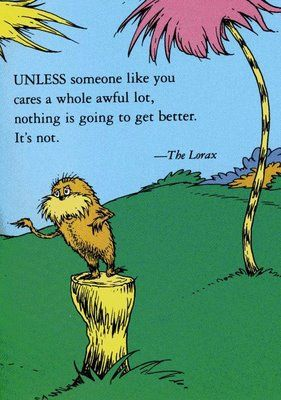
A lot of people come away from The Lorax with the feeling that the right answer is to never cut anything. I understand why. The story is emotionally simple in the way good children’s stories often are. A person cuts trees. The forest disappears. The Lorax leaves. The child receives the seed. The reader is asked to care a whole awful lot. It is memorable because it turns natural resource abuse into something that a kid can understand.
But when I think about forestry, I do not see the forester as the Once-ler. At least, I do not see the responsible forester that way. I see the forester as much closer to the kid at the end of the story, the one who is handed the seed and told that the future depends on someone caring enough to do something with it. That is what foresters are really doing when they are doing the work well. They are trying to care a whole awful lot about what happens to forests next, even though that idea is easy to say and very hard to communicate.
In an earlier post, I wrote about forestry as the centrist: this difficult middle ground where an extractive practice can also be a sustainable practice. Forestry sits between two very simple stories. One story says forests should be left alone entirely. The other story says forests are primarily raw material. Responsible forestry has to live somewhere harder than either of those. It has to admit that people need wood, rural economies need work, forests need disturbance, and the ecology of a place can be harmed by either reckless extraction or by pretending that no management has consequences.
This post is a stem off of that one. I am less interested here in re-explaining the whole responsible-versus-irresponsible forestry dichotomy, although that is still underneath everything. I am more interested in the communication problem itself. If you do not have public perception on your side, it limits what you can do. That has been a recurring theme in my conversations with foresters across the northern hardwood range, especially once you get into more densely populated areas where voters, hikers, neighbors, and urban publics may be increasingly disconnected from forests and managed forests.
The forestry literature has a useful phrase for this: social license to operate. In natural resource fields, social license usually refers to the public acceptance, trust, and legitimacy that allow an industry or management practice to keep functioning, even beyond its formal legal permission. Moffat and colleagues describe social license as a way of thinking about societal acceptance of natural-resource operations, with trust, fairness, and governance shaping the relationship between industry and society (Moffat et al. 2016). A Michigan forest products study makes the same point in a very forestry-specific way: social license depends on place, history, relationships, shared values, and whether people believe the industry is acting responsibly in the landscape they care about (Ketola et al. 2022).
That phrase can sound corporate or academic, but the basic idea is simple. A forester can have the legal authority to manage a stand, a silvicultural prescription that makes sense, and a responsible harvest plan, and still run into a wall if the public sees cutting and thinks only of destruction. Social license is the difference between a public that says, “Explain what is happening here,” and a public that says, “Stop all of it.”
That difference is not abstract. When I think about places like Massachusetts, where cutting on public lands has become politically contentious and where moratorium language has entered the conversation, it speaks to a misunderstanding of what forestry is all about. To assume that there is no responsible cutting happening whatsoever, and to lay a moratorium across management because of that assumption, is basically to throw your arms up in the air and give up on any form of management. It treats all cutting as if it belongs in the same moral category as the Once-ler. It leaves no room for the forester who is trying to regenerate a stand, maintain species composition, support a local forest economy, reduce risk, or improve long-term resilience.
This is where The Lorax is useful, but also where I think we misremember it. The Lorax is there to speak on behalf of the trees after a cut has happened. He is responding to overreach. He is responding to a system where extraction becomes the only goal and every other responsibility gets ignored. That is very different from saying that no tree can ever be cut responsibly. The problem with the Once-ler is that he did not know when to stop, did not seem to understand what he was taking from, and did not leave a forest behind.
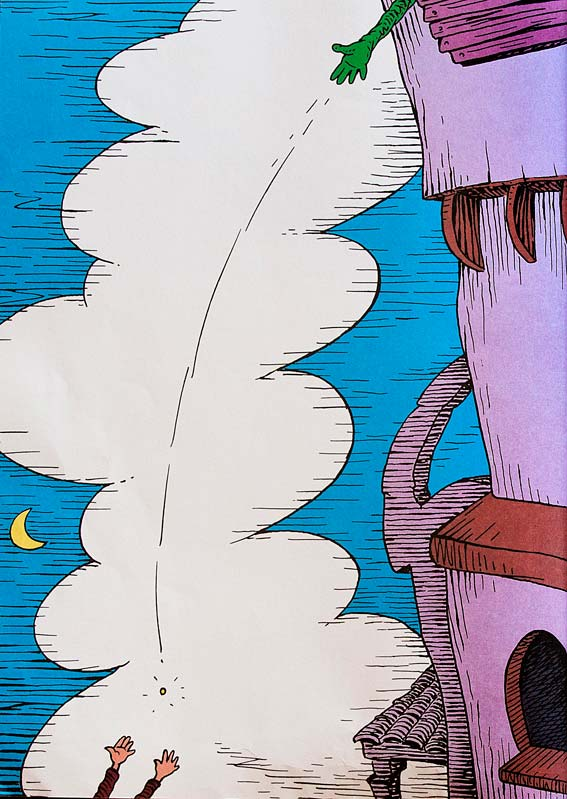
Responsible forestry begins from a different premise. It asks what should remain. It asks what should regenerate. It asks which species we want in the future stand, how much light should reach the forest floor, what kind of disturbance the system is adapted to, where the water goes, what wildlife needs, what the landowner wants, what the public expects, what the market can support, and what mistakes have already been made in that place. It is still cutting trees. It is still an extractive process. But it is an extractive process that should be accountable to the future forest.
The trouble is that the public often sees the moment of disturbance much more clearly than it sees the intent. A harvest is visible. Ruts are visible. Slash is visible. A canopy gap is visible. Young regeneration is often invisible for a while, or at least it does not look like the forest people are emotionally attached to. What might look messy right now can be the action that produces better outcomes in twenty years. That is hard to explain in a media environment that rewards immediate images and simple moral categories.
Forestry also has an image problem because so much of its public-facing history still looks like old extraction. I want to write more later about how forestry is interpreted in museums, because the museum experience deserves its own post. For this post, the basic point is that many people still encounter forestry through an older visual vocabulary: old skidders, rusted machinery, and images of men standing on top of millions of board feet stacked from old-growth forests. Those images are historically important. They also leave an impression.
If that is the public’s visual vocabulary for forestry, then any cutting action becomes harder to defend in the short term. People see modern management through the shadow of old exploitation. They see a harvest and think of the Once-ler, even when the person marking the stand is actually thinking about regeneration, residual structure, deer browse, invasive plants, seed sources, future entries, and what the forest will look like after time has passed.
That is one of the communication failures in forestry right now. The profession is still a vibrant community. It is still moving forward like any scientifically driven field. That was part of what I tried to describe in the textbook post, where forestry texts have evolved over time to improve forestry outcomes and forestry education as a whole. Modern forestry has built on experience, science, better practices, ecological silviculture, and a constant effort to improve what happens in the woods. But I do not think that scientifically driven message is described well enough to the public.
Instead, forestry often appears archaic. The public image can feel like some yesteryear figure: the quiet forester, the seldom-seen worker, the person who stays out in the woods, soft-spoken and focused intensively on the task at hand. There is something charming about that image, and there is probably some truth in it. I also do not think a lot of foresters get into forestry because they like public speaking. Many of them would probably rather be in the woods than in front of a camera explaining why a harvest looks the way it does.
But that quietness has a cost. We lack advocates in our corner. We lack what I kept calling, to different people on the tour, a megaphone. The megaphone does not have to mean every forester becomes an influencer. Please, for everyone’s sake, I do not think that is the whole answer. But forestry does need better public storytelling. It needs more transparency, especially on public lands: state lands, federal lands, county lands where those exist. It needs larger campaigns that get people on foresters’ side by explaining the merits of managed forests from a jobs perspective, a vibrant local economy perspective, and an ecological perspective. It needs to show why active management can help the ecology of systems, as a real explanation of how forests respond to disturbance and care.
Short-form public storytelling matters here because that is where attention already is. I wrote about short-form videos in the landowner education post, and I do not want to simply repeat that argument. The difference here is audience and purpose. In the landowner education context, short-form content is one channel in a fragmented knowledge system. Here, short-form storytelling is part of the profession’s social license. It is one way to give hikers, voters, neighbors, students, and urban publics a better mental picture of what foresters actually do.
A thirty-second video cannot explain all of silviculture. It can show a forester standing in a canopy gap and explaining why light matters. It can show before-and-after images of regeneration. It can show a stand that looked rough five years after harvest and healthy twenty years later. It can say, “Here is what we cut, here is what we left, and here is what we are trying to grow next.” That kind of communication does not erase complexity, but it gives people an entry point before the only story they hear is that cutting equals destruction.
The stakes are higher than professional reputation. In the absence of any management whatsoever, we leave ourselves at a disadvantage. Foresters, forestry, and the timber sectors enable active management right now. That does not mean every actor in the timber sector is automatically responsible, and it does not mean every harvest deserves public trust by default. It means that if society wants active forest management, someone has to do the work, someone has to have the expertise, someone has to have the equipment, someone has to operate the mills, and someone has to keep enough economic structure alive for management to be possible.
If responsible forestry loses its social license, the consequence is not a magical landscape where forests remain exactly as they are. Forests keep changing. Trees die, blow down, rot, seed in, get browsed, get replaced, get shaded out, get stressed by pests, disease, drought, or competition. The choice is rarely between change and no change. The choice is often between deliberate management and unmanaged change, between a public that understands what foresters are trying to do and a public that sees every stump as evidence of failure.
This is why I keep coming back to The Lorax. It gives us one of the dominant stories people carry about cutting trees, especially people who grew up loving forests from a distance. That story matters. It teaches care. It teaches restraint. It teaches that taking everything and leaving nothing is wrong. I do not want forestry communication to reject that lesson, because the lesson is correct. I want forestry communication to finish the thought.
The Once-ler is what happens when extraction loses responsibility. The child with the seed is what happens when someone accepts responsibility for the future. The forester, at least the responsible forester, belongs closer to that second image. The forester is not there to speak over the trees, or to pretend that every cut is good, or to wave away the ugly parts of forestry history. The forester is there to understand what the forest needs next and to explain that work clearly enough that the public can see the difference between use and abuse.
Silence will not do that. If forestry stays quiet, old extractive imagery will keep defining the profession. Rusted machinery, old-growth log piles, and the worst examples will become the public story by default. In that vacuum, the Lorax will speak for the trees, but the forester will not be heard at all.
That would be a shame, because the forester also speaks for the trees when the work is done responsibly. The forester speaks for the trees by thinking about regeneration, future species composition, soil, water, habitat, wood products, rural work, and the long time scale of forests. The forester speaks for the trees by caring about what is left behind.
Maybe that is the public story forestry needs to tell more clearly. The Lorax speaks for the trees. But so does the forester, when the forester is the one holding the seed.
Works Cited
Ketola, Zoe, William Lytle, Chelsea Schelly, Mark Rudnicki, and Matthew Kelly. 2022. “Perspectives on the Social License of the Forest Products Industry from Rural Michigan, United States.” WikiJournal of Science 5(1). https://doi.org/10.15347/WJS/2022.001.
Moffat, Kieren, Justine Lacey, Airong Zhang, and Sina Leipold. 2016. “The Social Licence to Operate: A Critical Review.” Forestry: An International Journal of Forest Research 89(5): 477-488. https://doi.org/10.1093/forestry/cpv044.